

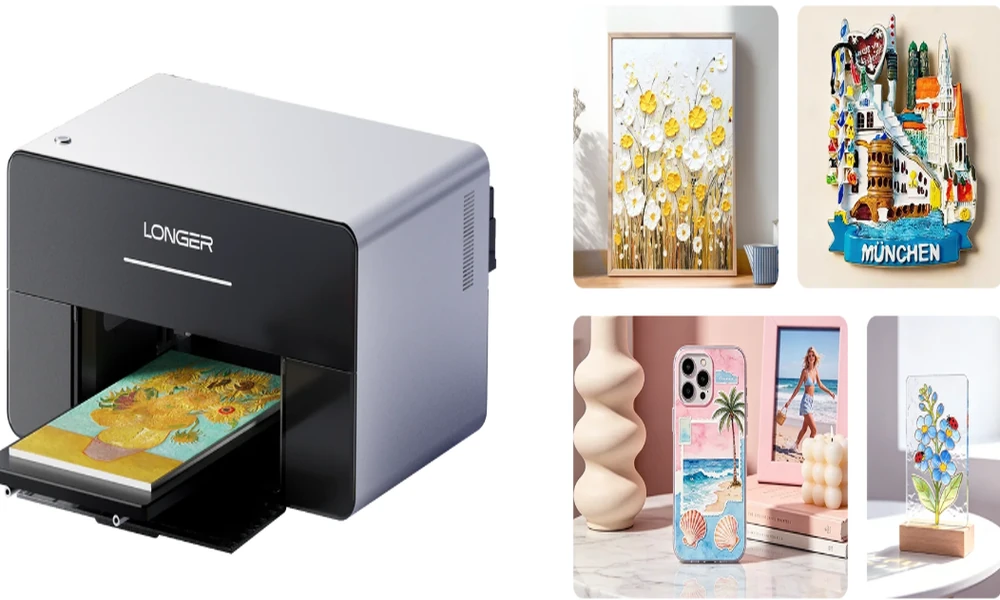
Eight years ago, I launched my Etsy shop with a single desktop laser engraver and a dream. Laser engraving built the foundation of my business-it allowed me to offer clean, personalized wooden signs, etched tumblers, and sleek leather patches. However, as my order volume grew and market competition intensified, I hit a persistent ceiling: customers kept asking for full color. They loved the tactile, permanent feel of engraved items, but they wanted vibrant logos, multi-colored artwork, and intricate photos that standard laser cutters simply cannot produce on their own.
Unwilling to turn away lucrative custom orders, I spent months researching solutions like sublimation and direct-to-garment printing. Sublimation required specialized polyester-coated blanks and heavy heat presses, limiting what I could customize. That is when I discovered the game-changing potential of direct-to-film technology-specifically, using a Small UV Printer to create UV DTF Printer transfers. Transitioning from monochrome laser engraving to full-color custom product manufacturing completely transformed my store’s bottom line.
The Problem with Monochrome in a Color-Driven Market
Laser engravers excel at texture, vector line work, and deep precision cuts. Yet, grayscale or scorched wood tones cannot capture a corporate client’s strict brand guidelines or a bride’s pastel wedding palette. Turning down high-margin jobs because I couldn’t match brand colors was frustrating.
While industrial flatbed UV printers were out of reach due to their massive footprint and ten-thousand-dollar price tags, compact desktop models changed the equation. Integrating a Small UV Printer into my modest workshop allowed me to bridge the gap between small-batch artisan work and high-volume full-color production without sacrificing precious floor space.
The Game Changer: What is a UV DTF Printer?
Unlike traditional direct-to-substrate printing, which requires placing physical products directly on a printing bed, a UV DTF Printer prints specialized UV-curable ink directly onto a transfer film (A Film). The printer applies dynamic layers of CMYK inks, bright white ink, and a glossy or matte clear varnish, topped off with an adhesive layer applied via a laminator (B Film).
The result is a durable, waterproof, scratch-resistant sticker-like decal that can be applied to virtually any hard, flat, curved, or irregular surface-metal, glass, acrylic, wood, ceramics, and plastic-without needing a heat press or special surface coating.
For an Etsy seller, this technology provides three major advantages:
Versatility Across Materials: You can deck out stainless steel tumblers, glass cans, phone cases, and acrylic signage without retooling your setup.
No Shape Constraints: Flatbed UV printing can struggle with oddly shaped objects or deep curves. UV DTF transfers peel off like decals and stick smoothly onto almost any contour.
Seamless Scalability: You can print hundreds of design transfers in bulk ahead of time. When orders arrive, applying a transfer takes less than 30 seconds, drastically cutting down order fulfillment times during peak holiday seasons.
Hybrid Crafting: Combining Laser Engraving and UV DTF
Transitioning to full color doesn’t mean abandoning your laser engraver. In fact, combining the two technologies offers a unique competitive advantage on platforms like Etsy.
I began using my laser to cut custom acrylic shapes, wooden plaques, and leatherette blanks, then used my UV DTF Printer to apply raised, vibrant graphic overlays directly onto those cut pieces. The raised varnish output from the printer creates a rich, tactile 3D effect that feels premium to the touch. This hybrid approach allowed me to raise my average order value significantly while offering products few competitors could replicate.
Practical Advice for Etsy Shop Owners Making the Switch
If you are looking to expand your monochrome shop into a full-color custom studio, here are a few tips I wish I knew on day one:
Start Small with Space: Choose a reliable Small UV Printer that fits comfortably on a sturdy workbench. Ensure your room has reasonable ventilation and temperature control to keep the UV inks flowing smoothly.
Master the White and Varnish Layers: The magic of UV printing lies in its layering capability. Using white ink as a base makes colors pop on dark or transparent surfaces, while a clear varnish layer adds durability and a high-gloss finish.
Focus on Product Photography: Full-color, high-gloss products catch the eye far faster in Etsy search results than flat monochrome listings. Re-shoot your bestsellers with vibrant UV DTF color upgrades to boost click-through rates.
Integrating UV DTF printing technology opened up endless creative avenues and unlocked higher profit margins for my business. If you want to scale your custom shop, move beyond monochrome and give your customers the full-color customization they are looking for.
